
TRUE OR FALSE ABOUT CASHMERE
There's more to cashmere than softness. What's actually accurate about this mythical material, and what isn't? Singular tests six myths from the world of knits.
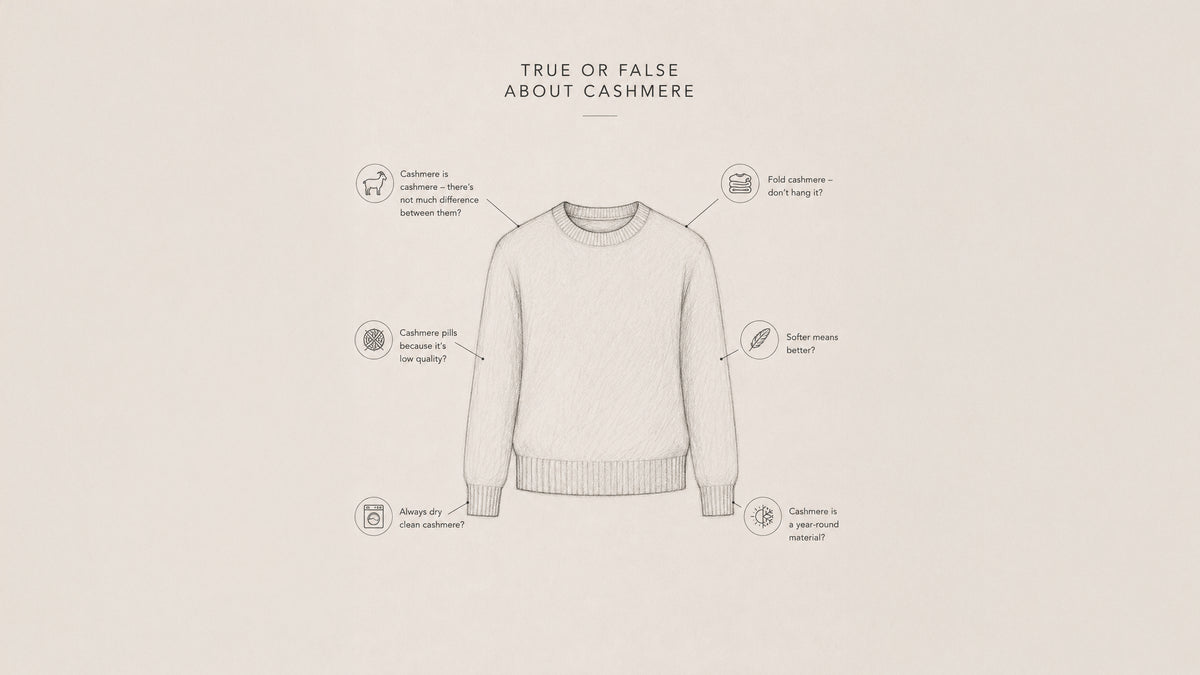
"Cashmere is cashmere – there's not much difference between them"
False. The difference starts at the source. Grade A cashmere, for example, comes from the underbelly of Mongolian goats, hand-combed during spring when the fibres are at their finest. Cashmere collected from other parts of the goat, or mixed with thicker guard hairs, produces a noticeably different result over time.
"Cashmere pills because it's low quality”
False. Pilling is a natural process, and it happens when short surface fibres tangle together through friction. The longer the fibre, the less it pills. The higher the ply, the more resistant it is. But all cashmere will eventually pill to some degree. It's a sign you're wearing it, and using a cashmere comb once in a while is all it takes to restore the surface.
"Fold cashmere – don’t hang it"
True. Hanging cashmere – especially sweaters – causes the fibres to stretch and distort over time. A neatly folded piece holds its shape far longer than one left on a hanger.
"Always dry clean cashmere"
False. Machine wash on a wool programme at 30°C, short cycle, no centrifuge, no tumble drying. Or wash by hand. Either way, always use a delicate wool and cashmere detergent without enzymes. Let it swirl gently, never wring or stretch, and dry flat. Most of the time, hanging your cashmere out in fresh air is enough.
"Softer means better"
Not necessarily. Some finishes and shorter fibres feel incredibly soft in the shop but break down quickly. What determines how a cashmere piece holds up over time is the fibre length and how it’s spun. Our cashmere comes from the Gobi Desert in Mongolia, with fibres up to 50mm long and as fine as 14 microns. That's what gives it lasting softness, not just softness on the hanger.
"Cashmere is a year-round material"
True. Cashmere is both highly insulating and naturally breathable, which makes it suitable across seasons. The same fibre that keeps you warm in cold weather regulates temperature when it's mild. It's one of the few materials that genuinely earns year-round wear.